Strategic Management of Construction Equipment Oils and Lubricants: A Look Back at the Jungent Latvia and Shell Industrial Conference

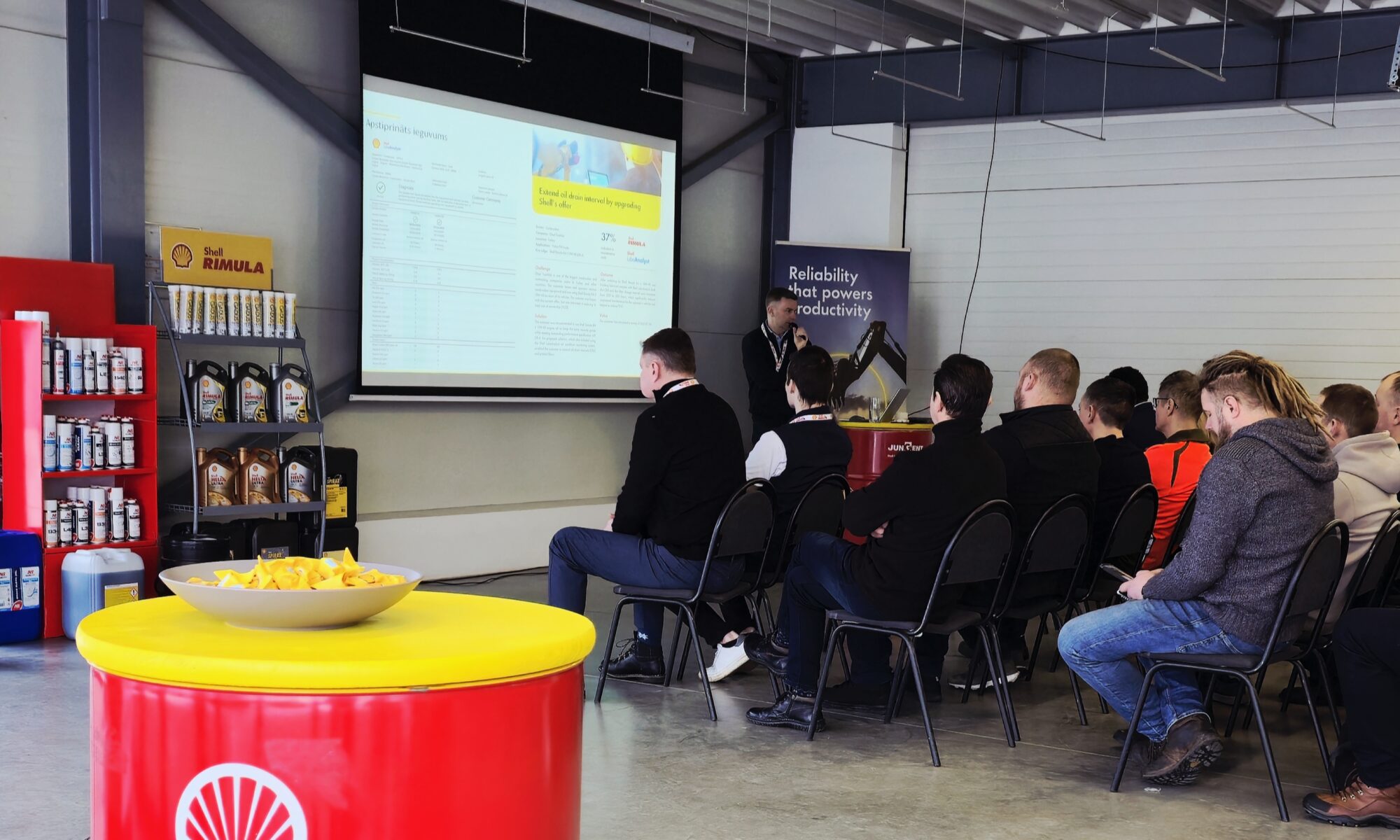
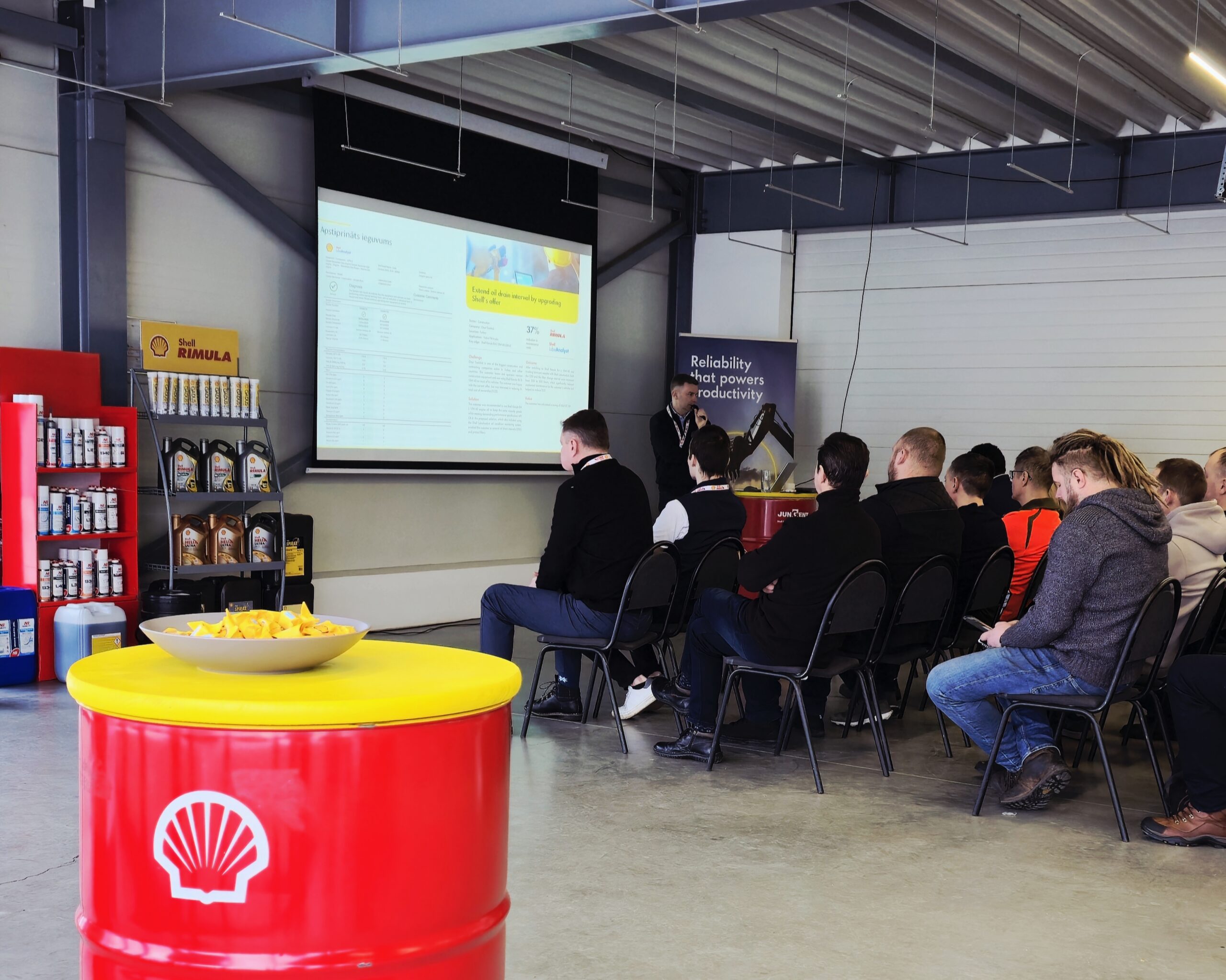
On February 11th, the “333” race track hosted a major industry event, bringing together construction company executives and fleet managers. The conference was organized by Jungent Latvia—the official Shell distributor in the Baltic States with 19 years of experience—in collaboration with Shell, which has been recognized as the world’s leading lubricants supplier for 19 consecutive years.

The event’s primary focus was to provide expert, in-depth knowledge on construction equipment lubrication solutions. The core goal: helping businesses reduce their Total Cost of Ownership (TCO), prevent unplanned downtime, and maximize the service life of their heavy machinery.

Innovations in the Engine Oil Segment: Shell GTL Technology

Kicking off the conference, Raimonds Sauja (Shell Lubricants Sales Manager in Latvia) guided attendees through the latest, strictest emission standards and how Shell Rimula heavy-duty engine oils have evolved to meet them.

A major highlight of the presentation was Shell’s Gas-to-Liquids (GTL) technology. This innovative process creates crystal-clear base oil from natural gas rather than crude oil, eliminating typical impurities. For construction equipment, this delivers several practical advantages:

  • Reduced oil consumption and evaporation, thanks to stronger molecular bonds.
  • Improved anti-friction properties, which directly contribute to fuel economy.
  • Easier cold starts and reduced engine wear, ensured by a naturally higher viscosity index, even at extreme temperatures.


Evolution of Transmission Fluids: The Need for Specialized Products

In his presentation, Arnis Ģeris explored the technical nuances of the Shell Spirax transmission fluid range, highlighting the growing demands of original equipment manufacturers (OEMs). He stressed that historically popular STOU (Super Tractor Oil Universal) oils are no longer sufficient for modern construction equipment, as they fail to meet the stringent engine oil quality standards required by today’s machinery.

Relying on inadequate universal fluids carries significant risks:

  • Foaming can occur in hydraulic systems, causing the system to “jerk” and leading to pump defects caused by cavitation.
  • An inappropriate friction coefficient can cause “wet brake” noise and impair clutch performance.

To avoid these issues, modern machinery requires specialized UTTO or TO-4 specification oils (such as Shell Spirax S4 CX and S4 TXM). These fluids are precisely formulated to handle specific friction materials and heavy loads.

Hydraulic System Efficiency and Reliability

Andrés Nazir Orozco Ramírez, Technical Manager from the Shell Global Team, analyzed the challenges facing modern hydraulic systems—namely, increasing power density, higher operating pressures, and smaller oil reservoirs. These factors put immense stress on hydraulic fluids, which is exactly what Shell Tellus hydraulic oils are designed to handle.

The presentation showcased impressive test results for Shell Tellus S2 VX and the innovative Shell Tellus S4 VE. Unlike many alternatives, Shell Tellus products demonstrate an exceptional ability to separate from water and maintain high filterability even in wet conditions, preventing costly filter blockages. Additionally, the biodegradable Shell PANOLIN series was highlighted as the ultimate solution for ecologically sensitive environments, delivering maximum performance and protection while complying with strict environmental standards.

To demonstrate the financial impact, a Total Cost of Ownership (TCO) case study was presented: by switching a crusher’s standard hydraulic oil to Shell Tellus S2 VX 46 and utilizing Shell LubeAnalyst monitoring, a company successfully extended its oil drain interval from 800 to 2,000 hours, dramatically cutting downtime and maintenance costs.

Grease Specifications and Compatibility Risks

The theoretical section on lubrication wrapped up with practical guidance on selecting the right Shell Gadus greases. A crucial topic was the chemical compatibility of different thickeners. Experts warned that mixing incompatible greases (for example, combining a lithium-based grease with a bentonite-based one) can cause the mixture to become too liquid, harden, or bleed oil. This strips bearings and pins of essential lubrication, resulting in costly, irreversible equipment damage.

Professional NB Quality Solutions for Equipment Maintenance

The practical side of the event was complemented by Urmo Aava, who presented the product range of NB Quality, the leading technical aerosol brand in the Baltics. The brand offers field-tested solutions specifically tailored for harsh industrial environments, making daily mechanical work much easier:

  • High-performance cleaners: ranging from universal solvents to powerful agents for removing deep soot and stubborn deposits.
  • Fast-acting rust removers: featuring products with a cold-shock effect and special additives (MoS2, graphite) to tackle even the most complex dismantling jobs.
  • Durable assembly greases and oils: ceramic and copper greases with moisture-resistant base oils, guaranteeing high adhesion, excellent corrosion protection, and thermal resistance up to +1200°C.

These advanced maintenance products are designed to speed up service routines and ensure reliable equipment operation, even in the most hard-to-reach components.

Practical Experience, Industry Machinery, and Car Tests

The informative sessions were backed up by a real-world defect analysis, allowing attendees to physically inspect engine, transmission, and hydraulic system components that had been damaged by the use of incorrect oils.

Our cooperation partners Baltem and Alwark added tremendous value to the event, giving attendees the chance to get up close and evaluate the latest, most powerful Komatsu and Hitachi industrial machinery right at the venue.

The conference concluded on a high note, offering participants an exclusive networking opportunity in an informal atmosphere, along with a chance to test their driving skills on the challenging “333” off-road track. An impressive fleet of vehicles was available for test drives, including the FOTON TUNLAND V9 and G7, Chery, VW Amarok, VW Touareg, and the innovative electric KGM pick-up, proving their mettle in real off-road conditions.

Summary

The significance and added value of the event for the industry were summarized by Ronalds Dzelme, Shell Marketing Manager in the Baltic States:

“This conference clearly demonstrated that choosing the right lubricants isn’t just a technical maintenance topic — it’s a strategic business decision that directly affects a company’s profitability. We are thrilled by the strong interest from industry professionals and grateful for the opportunity to share Shell’s global expertise right here in Latvia, blending valuable knowledge with an exciting experience on the track.”

Proper lubrication is an investment. Jungent Latvia and Shell would like to thank all participants and partners for contributing to a highly successful and professional event!
Shell leads global lubricants market for 17ᵗʰ year

Shell Lubricants retains its status as the leading global supplier of finished lubricants for a 17th consecutive year, according to the 21st edition of Kline & Company’s report*

The report covers all leading lubricant-consuming country markets, market segments, product types and formulations. Shell retains the number one ranking for all three lubricants categories tracked by Kline – consumer automotive, commercial automotive and industrial.

Jason Wong, Global Executive Vice President Shell Lubricants, said: “We are thrilled to retain our status as the number one global supplier of finished lubricants for another year. This reflects our focus on supplying the right lubricant and fluid solutions for friction and thermal management to our consumer, commercial and industrial customers, and supporting the world’s progress in a reliable, efficient, and sustainable manner. With our leading brand, technology and people, our lubricants business will continue to support Shell’s Powering Progress strategy. With this in mind, we are now focused on transforming our business from being the leading global lubricants supplier of today to become the leading lubricants and fluid solutions provider of tomorrow.”

Shell has maintained its global leadership position and competitive advantage by continuing to invest in premium and differentiated products including Shell Helix passenger car oil, Shell Advance motorcycle oil, Shell Rimula truck and heavy-duty oils, and Shell Tellus and Shell Gadus industrial – preferred brands in many major markets.

Shell was one of the first to launch an E-Fluids portfolio in 2019 and today Shell E-Fluids improve the overall efficiency, safety, and sustainability of EV powertrains around the globe. However, the range of applications for such fluids goes far beyond EVs. For example, as part of an integrated offer for data centers, Shell has introduced a range of immersion cooling fluids designed to push the boundaries of performance, efficiency, and sustainability.

Shell is also delivering more sustainable solutions, with Lubricants playing a critical role in supporting Shell’s target of becoming a net-zero emissions energy business by 2050, and helping customers reduce their carbon footprint. For example, Shell Lubricants is reducing waste through the development of sustainable packaging and circular solutions, as well as delivering more sustainable options through its range of biodegradable products.

According to the latest report, Shell maintained its leading position with global market share at 11.6%. Much like the previous year, these global sales were split almost evenly between the three segments: 35% consumer automotive, 33% industrial, and 32% commercial automotive.

*Kline & Company’s report, Global Lubricants: Market Analysis and Assessment 2022.

Shell leads global lubricants market for 16ᵗʰ year

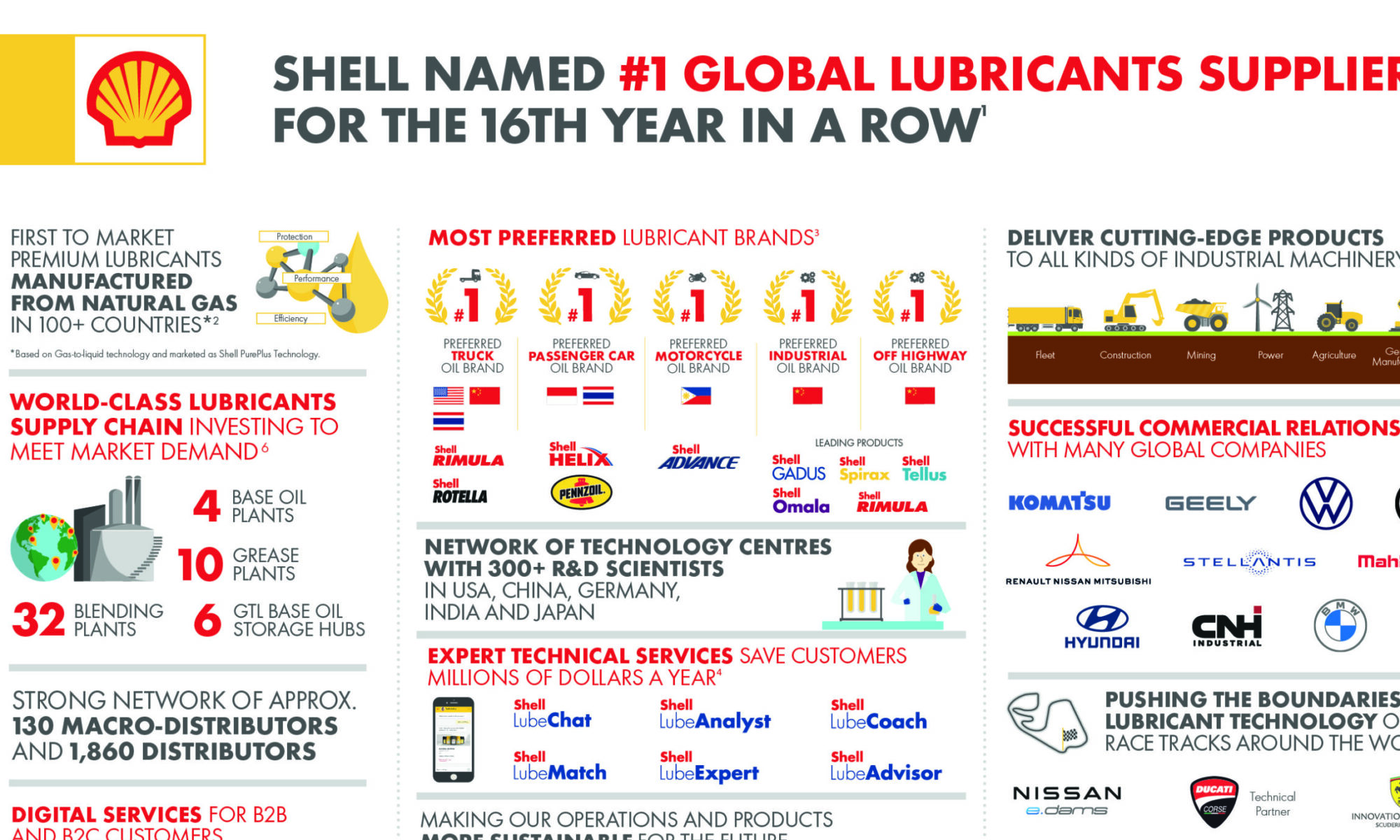
Shell Lubricants retains its status as the leading global supplier of finished lubricants for a 16th consecutive year, according to the 20th edition of Kline & Company’s report Global Lubricants: Market Analysis and Assessment 2021.


The report covers all leading lubricant consuming country markets, market segments, product types and formulations. Shell retains the number one ranking for all three lubricants categories tracked by Kline – consumer automotive, commercial automotive and industrial.

Machteld de Haan, Global Executive Vice President Shell Lubricants, said: “Our continued leadership of the global lubricants and fluids sector reflects our success in growing our base business through a focus on higher value and premium products and differentiating products, whilst continuing to build unique commercial and technical relationships. We are now focused on transforming our business, from being the leading global lubricants supplier to be the leading lubricants and fluid solutions provider of tomorrow.”

Shell was one of the first to launch an E-fluids portfolio in 2019, demonstrating technological readiness and achieving early traction with OEMs. Today, Shell E-fluids improve the reliability, efficiency and performance of electric powertrains. The business is now focusing on new fluids and a broader set of fluid management solutions, extending into thermal management of batteries, data centres, clean power and life sciences.

Shell is also delivering more sustainable solutions, with Lubricants playing a critical role in supporting Shell’s target of becoming a net-zero emissions energy business by 2050, and helping customers reduce their carbon footprint. For example, Shell Lubricants is reducing waste through the development of sustainable packaging and circular solutions, as well as delivering more sustainable solutions through its range of biodegradable products and solutions.

According to the latest report, Shell maintained its leading global market share relative to the year prior, with a slight increase in market share (0.6%) over the next largest IOC supplier, up to 11.6%, resulting in its number one ranking.

Shell’s total volume sold was approximately 4,500-4,700 kilotonnes of finished lubricants, equivalent to approximately 4.9-5.2 billion litres. These global sales were split between the three segments at a similar percentage split as the previous year: 36% industrial, 33% consumer automotive and 31% commercial automotive.

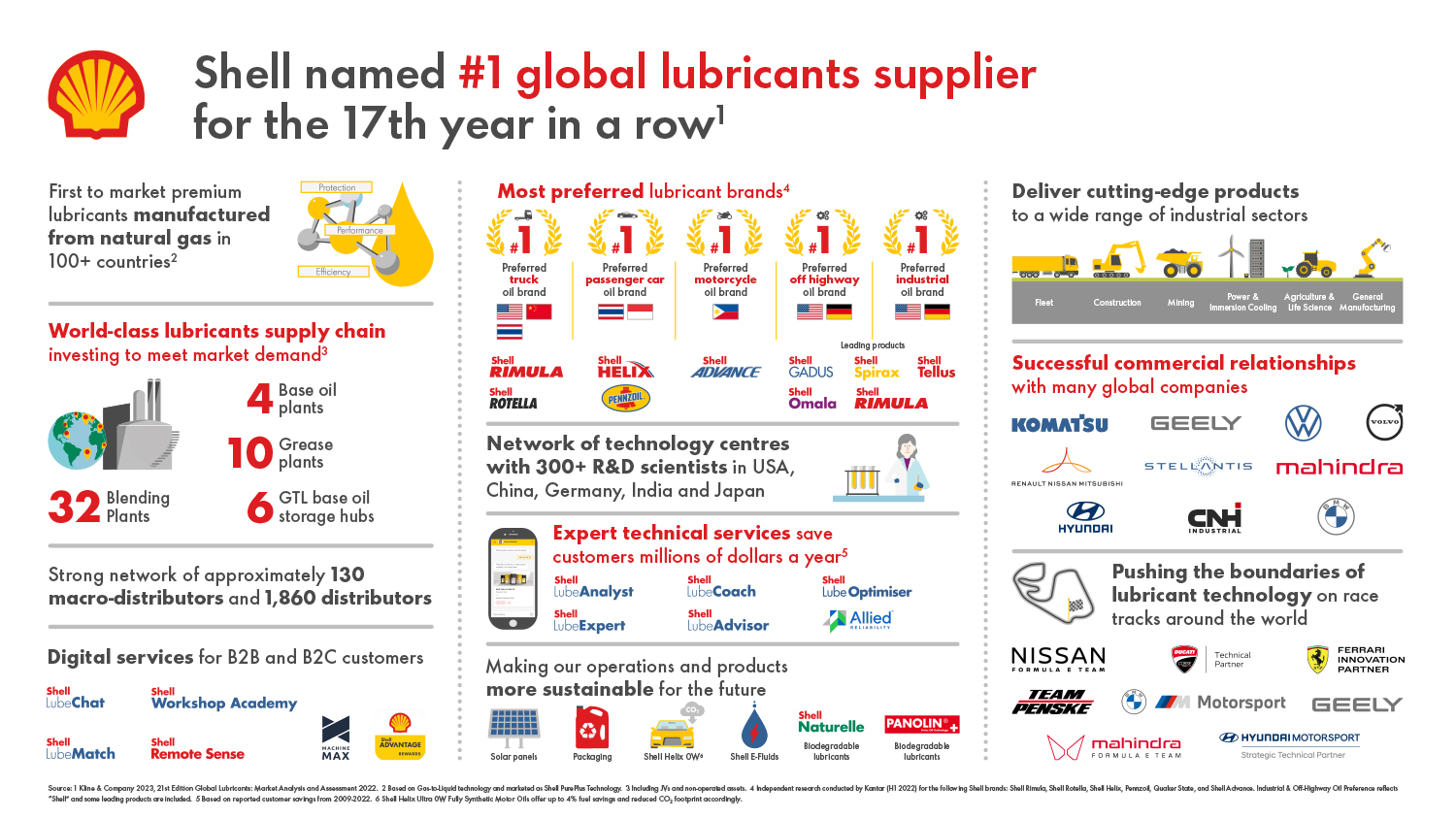
To find out more about Shell’s capabilities and leadership in lubricants, please see the infographic.

Shell announces intent to withdraw from Russian oil and gas

Mar 8, 2022

Shell plc (Shell) today announced its intent to withdraw from its involvement in all Russian hydrocarbons, including crude oil, petroleum products, gas and liquefied natural gas (LNG) in a phased manner, aligned with new government guidance. As an immediate first step, the company will stop all spot purchases of Russian crude oil. It will also shut its service stations, aviation fuels and lubricants operations in Russia.

Shell gas station

“We are acutely aware that our decision last week to purchase a cargo of Russian crude oil to be refined into products like petrol and diesel – despite being made with security of supplies at the forefront of our thinking – was not the right one and we are sorry. As we have already said, we will commit profits from the limited, remaining amounts of Russian oil we will process to a dedicated fund. We will work with aid partners and humanitarian agencies over the coming days and weeks to determine where the monies from this fund are best placed to alleviate the terrible consequences that this war is having on the people of Ukraine,” said Shell Chief Executive Officer, Ben van Beurden.

“Our actions to date have been guided by continuous discussions with governments about the need to disentangle society from Russian energy flows, while maintaining energy supplies. Threats today to stop pipeline flows to Europe further illustrate the difficult choices and potential consequences we face as we try to do this. Following government statements this week, I want to set out our position clearly. Unless directed by governments, we will:

  • Immediately stop buying Russian crude oil on the spot market and we will not renew term contracts.
  • At the same time, in close consultation with governments, we are changing our crude oil supply chain to remove Russian volumes. We will do this as fast as possible, but the physical location and availability of alternatives mean this could take weeks to complete and will lead to reduced throughput at some of our refineries.
  • We will shut our service stations, aviation fuels and lubricants operations in Russia. We will consider very carefully the safest way to do this, but the process will start immediately.
  • We will start our phased withdrawal from Russian petroleum products, pipeline gas and LNG. This is a complex challenge. Changing this part of the energy system will require concerted action by governments, energy suppliers and customers, and a transition to other energy supplies will take much longer. “These societal challenges highlight the dilemma between putting pressure on the Russian government over its atrocities in Ukraine and ensuring stable, secure energy supplies across Europe,” said van Beurden. “But ultimately, it is for governments to decide on the incredibly difficult trade-offs that must be made during the war in Ukraine. We will continue to work with them to help manage the potential impacts on the security of energy supplies, particularly in Europe.